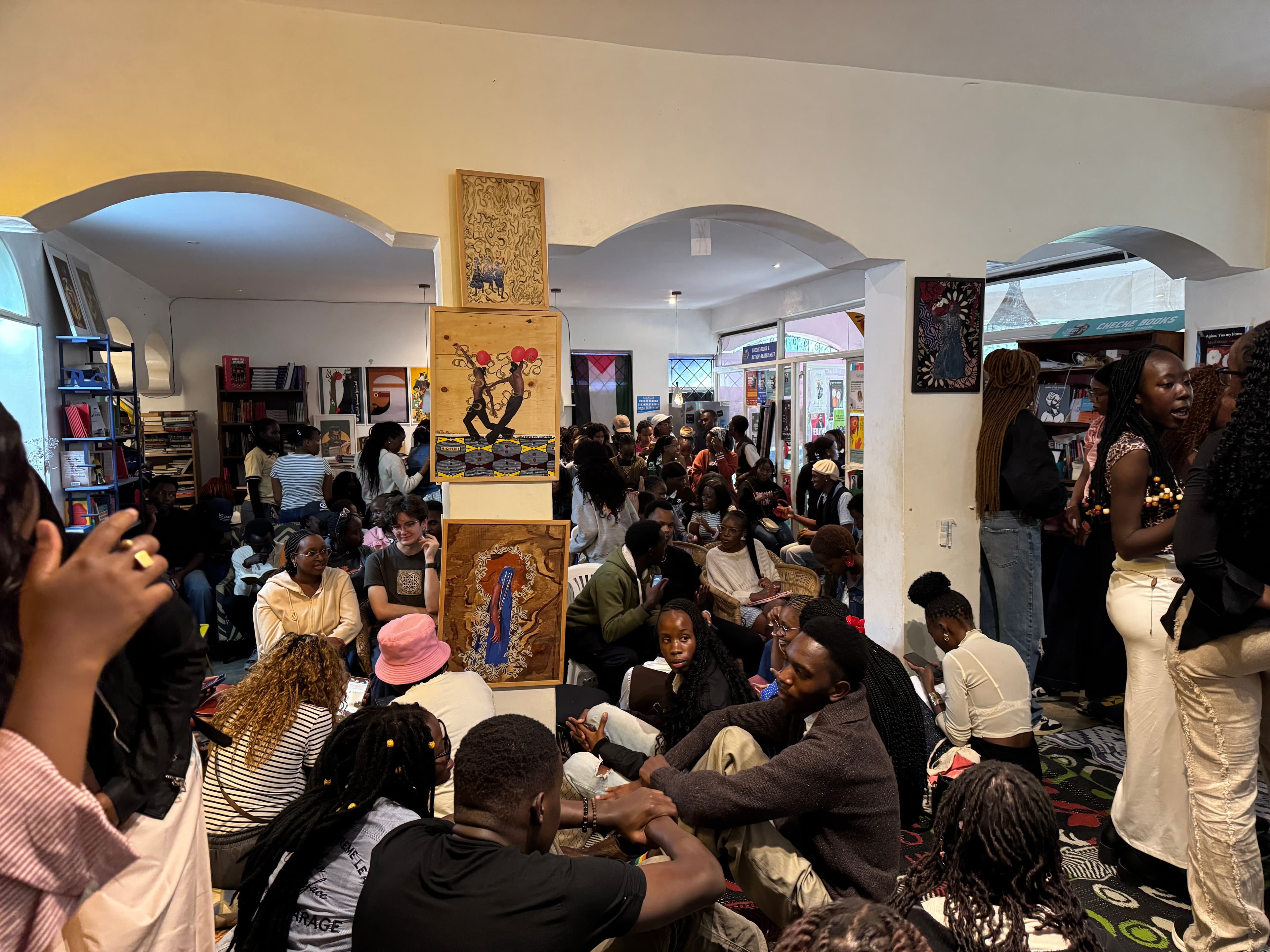
What Substack Taught Me About Kenyan Youth

Nyamani Marwa Matiko
Contributor
There was a moment, not too long ago, when reading young Kenyans writing online felt like standing in the middle of something alive. After the demonstrations of 2024, when the streets became dangerous and grief had no official language, writing took on weight. People wrote because they had to. Memory was at stake. Silence felt like betrayal. The essays that emerged then were uneven, angry and sometimes clumsy, but they were honest. You could feel the pressure behind them. They were not trying to be impressive. They were trying to hold something together.
Obanyi, writing in the weeks after those June protests, warned of something he called "the apparatus of forgetting"—the machinery, state and culture that ensures mass mobilisation does not become enduring memory. He was talking about what happens to movements after the streets empty. But his words apply just as well to what would happen to our writing. The infrastructure for collective thought was not built. The essays that felt so alive then would soon be replaced by something smoother, more repetitive, less willing to risk.
Substack in Kenya gained popularity into that moment like dry land after a flood. It gave many young Kenyans a place to think in public without the distortions of mainstream media or the shallow frenzy of timelines. For a while, it worked. The quality was undeniable. Writers proved they could argue, remember and locate themselves in history. There was hope in that. And this was not in the sentimental taste, but the grounded sense that a generation bruised by repression was learning how to speak without waiting for permission.
But something shifted. Or rather something has been shifting.
As the platform grew, writing began to change texture. It became smoother. More confident, not in the sense that comes after doubt and risk, rather one that arrives already resolved. More repetitive. Scrolling through Substack now often feels like reading the same essay rewritten by different hands. Same moral conclusions. Same villains. Same approved anger. Same safe distance from consequence. The writing is not wrong. That is the problem. It is correct in a way that costs nothing.
You see the new texture in the essays that speak constantly of "we"—we must organise, we need to learn from history, we are the ones who will rebuild—without ever stopping to ask whether the writer themselves has done the organising, joined the party, borne the cost they prescribe for others. The "we" becomes a shelter. It allows diagnosis to masquerade as a decision.
What I learned from the smartest writers on Substack is not how to perform outrage better, but how rare intellectual honesty actually is. Serious thinking, one comes to notice, does not arrive fully formed in the mind before the writing begins. It always hesitates. It contradicts itself. It risks being misread. Performance avoids all that. Performance knows exactly what it wants to say before it begins. It mirrors what the reader already believes and then calls that courage.
Some essays still carry the older texture. Aisha Mugo wrote about a pink whistle handed to her during teargas, and used it to think through sonic politics, collective action, and what it means to archive a movement. The essay was organised not around a settled argument but around genuine questions: How do we remember protests? How do protests sound? The theorists she cited were there to help her see more clearly, not to prove she could name them. This is writing that serves thought, not the writer.
Contrast this with an essay furious about the SHA fraud—KSh 11 billion stolen, we are not angry enough—that confessed, mid-way: "This is a section I got from Chat." The statistic was not the product of reading or understanding. It was a prop, downloaded whole, inserted to fuel an emotion that had already decided on its shape. The anger was real. But the thinking never arrived.
Online, it is easy to confuse visibility with conviction. Once people realise that certain postures are rewarded with readership, affirmation and a sense of belonging, writing quietly turns into a market. You begin to see essays written not because the writer is wrestling with a question, but because the moment demands content. You can feel when someone does not even believe what they are saying, but knows it will land well. That kind of writing is exhausting to read because it asks nothing of anyone. It reassures. It flatters. It performs morality instead of doing the harder work of thinking through its implications.
This matters politically, not aesthetically. A generation that is brilliant at diagnosis but allergic to decision is not a threat to power. Last year's by-elections told us that plainly. When duty arrived in its most boring form, registration and turnout, it was not the loudest online cohort that showed up. It was older voters, people who do not confuse commentary with leverage. Meanwhile, youth spaces filled with essays explaining why the system is broken, why voting is compromised and why protest must be reimagined. All true, perhaps. But also convenient. And that is why it is very easy for analysis to become a shelter from obligation, from the moment when a political diagnosis must harden into a choice that carries consequence, however limited or compromised.
Obanyi, writing about the movement's aftermath, put it this way: "They celebrated the moment the president blinked. They did not ask whether he had truly changed direction. They won the battle. They lost the war." The same is true of our writing. We celebrate the essay that lands, the diagnosis that confirms what everyone already believes. But we do not ask what institutions we are building, what infrastructure we are creating to protect the people who show up. We win the battle. We lose the war.
Substack, at its best, taught me that Kenyan youth can think deeply and write sharply. At its worst, it taught me how quickly thought can become theatre. How easy it is to hide behind long paragraphs and constitutional citations and still avoid the one act that closes the distance between belief and consequence, the decision to commit oneself to action that carries cost, limitation and the risk of failure. Writing does not absolve us from showing up. If anything, it sharpens the demand.
I am tired of reading pieces that sound brave but risk nothing. Tired of moral postures that never touch strategy. Tired of protest language that circulates endlessly online while the ballot box remains underwhelmed. This is not a call to stop writing. It is a call to stop performing. To write things you are not sure about yet. To admit uncertainty where it exists. To follow an argument all the way to its uncomfortable demands, including participation in flawed systems you would rather critique from afar.
Obanyi in, The Cost of Disorganized Resistance, named what happens when movements have strategy only for the streets, not for what comes after. He named them-Billy Mwangi, abducted while waiting for a haircut. Peter Muteti, taken while buying milk and eggs. Bernard Kavuli, grabbed at a petrol station. The state had watched their neighborhoods, planned for days, and when they moved, there was no infrastructure to sound the alarm, no protocol to protect them.
Written by
Nyamani Marwa Matiko
Nyamani Marwa Matiko is a Kenyan writer whose work has appeared in The Elephant Info, Qwani Blog, and The Standard Newspaper Kenya. His writing is rooted in East African life, often exploring themes of memory, loss, and human connection. These publications have helped shape his voice as a storyteller committed to capturing tender and emotionally resonant narratives.
View all storiesJoin the Conversation
(0 comments)Sign in to join the conversation
Share your thoughts and engage with our community