Nothing Can Wash This Clean

Elidah Wambui
Contributor
Cover Image by Roman Odintsov
-
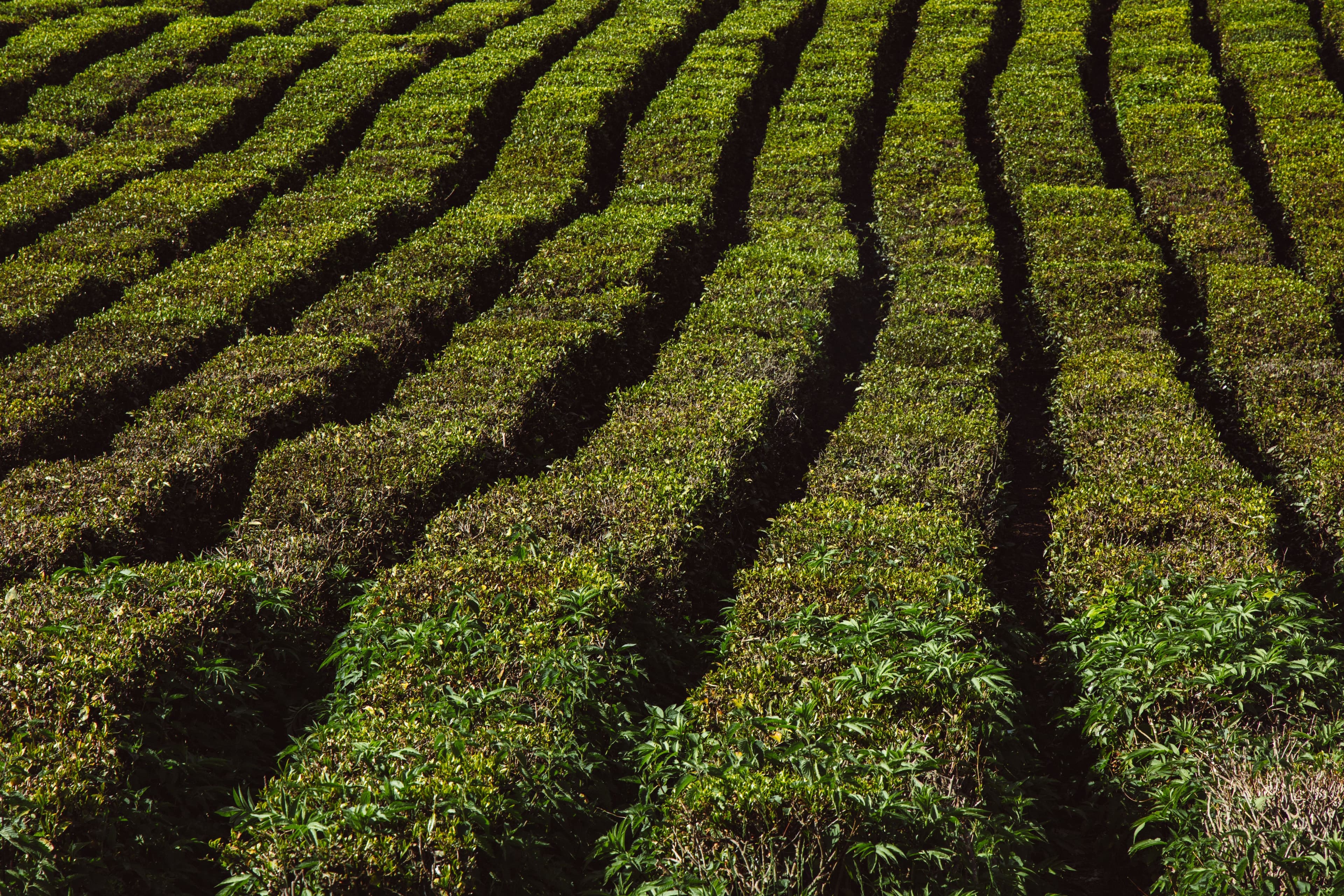
Funny what memories your mind refuses to shake. Mine is the red Murang’a soil. Not the polished postcard soil seen in coffee table books, but wet and clingy, just the way it felt under my fingernails when Mumbi and I were crawling through the tea bushes that night. The soil was heavy and stuck to us like a curse.
In 1992, the air in the village was heavy with more than just the anticipation of the coming rain. There were whispers of multi-partyism and change coming from Nairobi, but in our corner of Murang’a, time felt like a stagnant pool. Tradition was the only law that mattered, and the law said that Mumbi and I were no longer children. I was eighteen and Mumbi was twenty. By the standards of our village, we were already over ripe: Kĩrĩgũ, uncircumcised girls. A term spat out like a piece of gristle.
“Do you see how they walk Wambui?” Mumbi asked me one afternoon. We were walking back from the river, twenty-litre plastic jerrycans heavy against our backs. She was nodding towards Njeri, a girl from the neighboring shamba who had undergone irua a month before. Njeri moved stiffly, and her face constantly exhausted like someone trying to hold herself together with a frayed string.
“She’s lucky,” Mumbi said, her voice dropping so low it was almost buried by the sound of the cicadas. “At least she’s still breathing. Did you hear about Wanjiru? They say it was a fever, but we saw the blankets they carried out of her hut. They were soaked through and the smell…like that of meat left in the sun. You know, the infection eats you from the inside out once that blade is finished with you!”
I shivered because we had all seen it. The girls who disappeared into the earth, their names scrubbed from conversation because their deaths were seen as a shame and a sign of how they weren't strong enough. We knew that womanhood shouldn't feel like a death sentence, yet every auntie and every grandmother spoke of it as the only path to purity.
Our mother, Nyina, was a woman of few words and many scars. She had been shaped by the blade, then by the hands of a husband who saw her as property, and finally by the red soil she spent her life tilling.
That evening, as the sun dipped behind the ridges, she sat by the hearth and smoke from the wood fire swirled around her like a ghost. She was stirring mũkengeria, her eyes fixed on the bubbling pot.
“The Mũruithania is coming tomorrow,” she said. Her voice wasn't unkind, but it was flat, devoid of the mercy I was searching for. “Your father has already paid the fee and it is time for the house of Waweru to be honored.” I looked at Mumbi who didn't flinch but kept on shelling the maize on her lap; the rhythmic tic-tic of the kernels hitting the gourd, sounding like a countdown.
Nyina looked up then. She looked at our feet, at the way our shoes were tucked near the door, and at the small cloth bundles we thought we’d hidden so well behind the grain store. She knew. She had been a girl once, too. She had felt that same desperate urge to bolt into the forest.
“Do not think of the road,” she whispered, and for a second, her eyes flickered with a terrifying flash of recognition. “The road is for people with somewhere to land. You have nowhere. If you leave, you are dead to this soil, but the soil has a way of calling its children back.”
We waited until the moon was hidden by the heavy clouds of the long rains. Mumbi woke me with a hand over my mouth. “Now!” She breathed. We had two thousand shillings. A fortune and a pittance that Mumbi had earned by waking up at four o'clock in the morning for a year to wash the linens of the local schoolteachers, scrubbing their garments until her knuckles bled.
“We're going to Nairobi,” Mumbi said as we slipped out the back. “We'll find a bus at Kenol and once we're in the city, we’ll only be two more faces in the crowd. They can't cut what they can't find!” But the night was against us.
The rain had turned the path we meant to follow into a river of sludge. We avoided the main road, afraid of the men who patrolled the village paths with torches and every time a dog barked in the distance, I nearly jumped out of my skin. I kept thinking about my Guka who'd told us that a girl who ran away from tradition was like a tree with no roots; a tree that withers and dies. But as I felt the thorns tearing at my ankles, I thought I’d rather be a dead tree than a broken one.
We chose the valley, the shortcut through the black cotton soil. That was our undoing. Black cotton soil isn't like the red earth, it is a predator: slick, deep, and heavy. Mumbi led the way, her breath coming in ragged gasps.
“ Almost there, Wambui. Just past the stream—” Then came the sound. A sickening crack, followed by a muffled scream. Mumbi went down. Her ankle hadn't just twisted, it had buckled under the weight of the mud. “Go!” She wheezed, her face contorted in the moonlight. “Wambui, run! Get to the road. Tell them…tell someone!” I sobbed, trying to haul her up, “I’m not leaving you!”
But we weren't alone. Nyina hadn't just suspected we would run; she had warned Baba Mũnini, our father’s younger brother. The man believed a woman’s disobedience was a stain on the entire lineage and had been waiting by the stream, as if he knew exactly which path a pair of desperate girls would take.
The torches flickered to life through the trees like the sudden awakening eyes of a monster. They found us huddled under a thorn bush, covered in mud and tears. Baba Mũnini was leading them, but didn't yell, he only looked disappointed. “Why are you running from your life?” He asked, his voice deep and calm. They didn't punish us, that would have been too simple. Instead, they stared at us with a kind of pity, like we were stray dogs who didn't know any better. “This is for your own good,” one of my aunties, Njoki, said, her voice as flat as a stone. “You'll want to be clean when you want a husband.”
I wanted to scream that I didn't want a husband, I wanted my skin to stay mine. But the words grew thick and stuck in my throat.
They picked Mumbi up like a broken doll. “She needs a doctor!” I cried out. “She needs to be made whole,” Auntie Njoki replied, her voice cold. “The pain she feels now is nothing compared to the shame she has brought. We will wash her in the river. The cold will numb the bone, and the blade will repair the spirit.”
The preparation occurred in a clearing by the freezing water. They stripped us, and discarded our clothing like old skins. They poured river water over us until my skin began turning grey and my breath came in short, panicked stabs.
Mumbi went first because she was older, and because she had tried to lead me away.
I was forced to watch and saw the Mũruithania step into the light. A thin shadow of a woman with skin like cracked leather and eyes milky with cataracts that could see a world the rest of us didn't want to know of. She moved with a terrifying practiced indifference, her hand steady as she unsheathed a small, curved blade. It wasn't polished or bright. It was dull and stained, catching the gray, sickly light of the dawn like a jagged tooth.
They splayed Mumbi out on the dirt. Four women, heavy and smelling of woodsmoke, sat on her chest and pinned her legs. The air felt thin as the Mũruithania knelt between Mumbi’s legs. The only sound was the heavy, rhythmic thud of my own heart. A drumbeat for a sacrifice I was powerless to stop.
Mumbi didn't look at them. She looked at the sky, her jaw locked. Then the knife moved. It wasn't a quick cut. It was a slow, jagged sawing. I saw Mumbi’s body arch off the ground, a movement so violent I thought her spine would snap. Her eyes rolled back until only the whites showed. She didn't stay silent. She couldn't. She fought. She screamed until her throat was raw, a primal, jagged sound that seemed to shatter the very trees. She shrieked for our mother, she shrieked for God, she shrieked for a mercy that didn't exist in that clearing. A high, thin shriek that turned into a wet, desperate gurgle as she choked on her own terror.
“Silence!” the women hissed, their knees digging into her chest to pin the life out of her. “You are an embarrassment! Look at your sister. Look at the coward you’ve become!”
But Mumbi couldn't look at me. Her head was thrown back, her neck corded with the strain of a scream that had gone past sound. She was gone. Gone to that place where the mind hides while the body is unraveling. There was no more Mumbi in that clearing, only the raw, rhythmic twitching of her limbs and the blood that wouldn't stop soaking the red soil.
I saw the red blood spray the red soil beneath her as it turned a darker, wetter shade. I saw the jagged, raw edges of what was left of her.
They didn't stitch her. They didn't wash her. They didn't give her anything for the pain. They just let her bleed into the dirt. This was the honor to be part of the tribe.
Then, they turned to me.When it was my turn, I felt like I was watching it happen to someone else. That’s how you survive it, I think. You just leave your body for a little while. You go somewhere else. I thought about the stream. I thought about the way the water felt cool and how it didn't ask anything of me.
The pain. It wasn't just a sharp thing. It was a heat; a fire that began down my pelvis and spread until my whole brain felt like it was melting. The pain. It anchored me to the dirt. A jagged, hot iron that tore through my spirit like a ripping sensation splitting me in half. My vision went black. My heart stuttered as the cold air hit parts of me that were never meant to be exposed.
When it was over, I felt empty. Not pure like they'd said. Just hollow. Like a gourd that had been scraped clean to hold someone else’s milk.
“Let the air dry the wound,” the old woman said while wiping her blade on a piece of rag, “pain is the teacher. If it stings, then things are working.”
For weeks, Mumbi and I were nothing more than shadows draped over a shared mat. The room smelled of sweat, stale air, and the cloying, metallic scent of healing that felt more like rotting. We didn't look at each other. We couldn't. To look at the other was to see our shared failure mirrored, like physical proof that we hadn't run fast enough, hadn't been strong enough to outpace the traditions that wanted us broken.
The fear was a physical weight in the room. Every time the wind shifted, I thought I smelled the same sweet, sickly rot that had taken Wanjiru. I would lie awake, my hand hovering over the heat radiating from my own center, terrified that I would find the swelling, the yellow weeping, the sign that the blade had left a poison behind. Every shiver was a possible death sentence, every throb of pain was a reminder that our bodies were fighting a war they hadn't asked for. I watched Mumbi’s chest rise and fall in shallow, jagged hitches, wondering if she would wake up the next morning or if the fever would finally swallow her whole. We lay there, waiting to see if the infection would finish what the blade had started.
We were sisters, but now we were something else. We were members of the tradition. People who shared a common pain and the shattered dreams of what their future could be. Nothing would wash away what the ritual had broken, but we were intent on finding a path out of the darkness we'd inherited from the blade that cold morning. When we finally did speak, late one night when the fever had finally broken for both of us, Mumbi reached out and found my hand in the dark. “It stops with us,” she said. Her voice was cracked, but it was the strongest thing I’d ever heard.
Written by
Elidah Wambui
Elidah is a writer based in Nairobi, currently pursuing studies at the University of Nairobi. Driven by a deep curiosity about the human condition, they focus on narratives that explore the tension between individual identity and the weight of social structures. Their writing often leans into the raw and unpolished parts of life, seeking to give a voice to the internal dialogues that usually stay hidden.When not buried in academic work, Elidah is a dedicated student of languages, finding that the nuances of a new vocabulary offer a unique lens through which to view the world. Their storytelling is shaped by a mix of local observation and a broader interest in investigative themes, always aiming to capture the resilience of the human spirit. Whether through prose or creative essays, Elidah is committed to crafting stories that feel grounded and honest
View all storiesJoin the Conversation
(0 comments)Sign in to join the conversation
Share your thoughts and engage with our community