Qwani, Four Years On: A Conversation with Keith Ang’ana
The Editors
Contributor
Bio
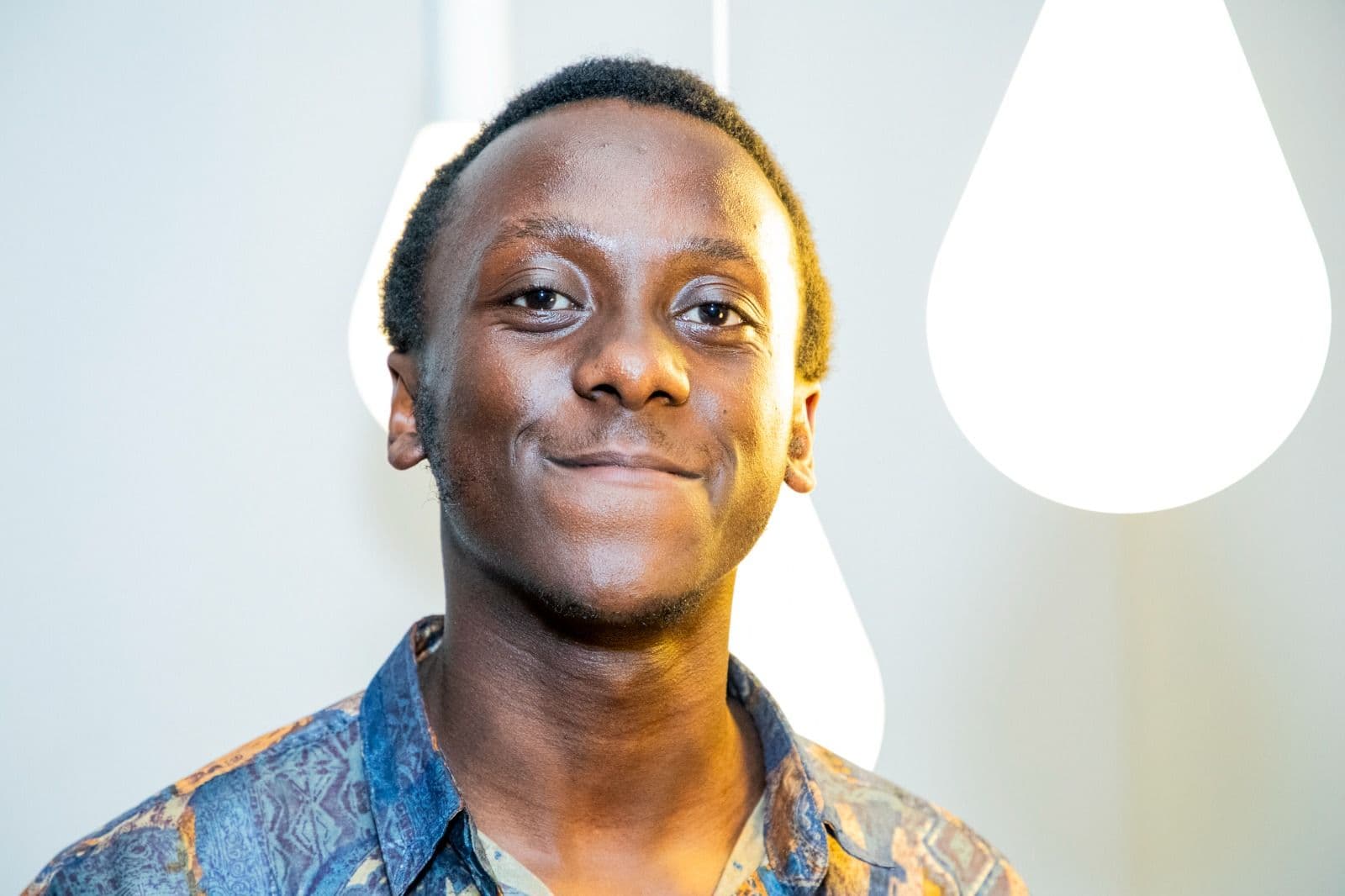
Keith Ang'ana is a writer, researcher and historian whose work focuses on the intersection between people, cities and the quiet politics of everyday life. He is also the Founder and Executive Director of Qwani.
Q. When Qwani began, the intention was to publish young talented authors and also support local writing talent. How has the journey been so far?
K.A: The journey of Qwani, much like my own life's trajectory, has been quite unpredictable. When we started off, our intention was to publish a book containing the works of young talented writers, in which we would platform their work to a larger audience, and in the belief that they'd finally gain the recognition they deserve, we'd call it a day, close shop and go back home. However, we got such massive reception for our work, and we learned that besides an interest in reading, these young people yearned for a community of like-minded peers. And so, we started venturing into supporting many other creatives as well as holding events where the community could bond.
The journey has been beautiful. I have made an innumerable number of friends, perhaps 10,000 (I have exceeded the suggested number of stable relationships that British anthropologist, Robin Dunbar, proposed in his theory of 'Dunbar's number'). And together, we have done so many things. At some point people started saying that Qwani might be a cult, because of the large following we had (hehe).
On the creative side, we've had so many artist collaborations and further collectives sprout up (think Kulture Klub, Dandia Sanaa), and it's something that I'm proud to see. The fact that people came to Qwani, found people with similar interests, found a common purpose and started working together, that people have even found lovers here, went on to date, and some like [ _names redacted_] are even getting married next month! I hope they invite me to officiate their wedding.
All in all, the journey has been beautiful. And I love everyone!
Q: Qwani has expanded into many different facets outside of writing. What more do you think Qwani can achieve in supporting creative talent in Kenya?
K.A: One of our main goals is to help creatives earn a living (by developing sustainable careers) through their art. We don't consider ourselves employers really. We are more of stepping stones for creatives, where they hone their craft and learn about the industry, then fly their wings to the next level. For example, some of the writers who have been with us have gone on to write for regional, continental and global publications such as The Elephant, Africa Is A Country, JAYLit, Brittle Paper, AfroCritik, Isele, Cosmorama Magazine etc., which is something I'm always proud of. It's like a mother bird watching their kids finally take off and fly.
Q: How do partnerships with other organisations factor into running Qwani? What has been the most challenging part of gaining partnerships in Kenya?
K.A: Partnerships do help immensely since most of the time, our partners bring in their expertise which we learn from. These partnerships also enable us to reap the benefits of division of labor and specialization (you can tell that I did a unit of Economics in university and got an A).
The challenging part is when we're trying to bring in someone who's higher up in the ladder than we are, and they keep asking for proof that what we're doing will benefit them. In such cases, it's usually difficult, since most of them have financial wants, something we can't always assure that we can provide.
Q: Much has been said about writing standards in Kenya. What is Qwani doing to maintain standards in publications or to raise them to produce even better work?
K.A: Well, for our recent publications, we have been working with expert editors who have been strict in ensuring that the work being published is of the best quality. Therefore, our last two books (Qwani 03 & Qwani 04) are so much better than our first two (this was also highlighted in an article by Frank Njugi).
Additionally, I have been hosting workshops to give young writers a chance to come and learn from expert writers about how to improve their writing skills. In October last year, we had a workshop on 'Creating Compelling Characters in Fiction' by Dennis Mugaa. In March this year we had a workshop on 'Writing Lives: Tributes, Memoirs & Auto-biographies' by Dr. Joyce Nyairo. Next up, in July this year, we'll have one on reportage/writing news by Christine Mungai, Editor-in-Chief at The Continent. These small initiatives are our contributions to improving standards in our publications.
Q: In running Qwani, what have you found is the main challenge for writers in Kenya and what do you think can be done about it?
K.A: The main challenge for writers in Kenya, or rather, that I've witnessed in the writing in Kenya, is that there's a huge gap between the quality of the work that is being churned out and the quality of work that most publications/magazines are looking for. Therefore, despite the number of writers around, and the vast number of pieces coming out daily (on blogging sites such as Wordpress, Medium and Substack), these writers cannot have their work published in literary magazines since the quality of work is wanting. Therefore, the rate of success for them is quite low, as compared to our contemporaries in other countries (Nigeria, for one). For that, I've done a couple of literary workshops to try and solve.
Additionally, there's a very small number of non-traditional publishers in Kenya, with most of the existing ones focusing on serious non-fiction work (political and economic articles - think of The Elephant and Debunk). This means that writers who have specialized in other genres don't have a local platform to have their work published, forcing them to compete with so many other people in the continental/international scene, something which reduces the chances of their work getting published (it's like comparing the chances of a KCSE graduate entering Kenyatta University to them entering Oxbridge). Even when their work does get published, it doesn't provide the local visibility that would make them gain recognition. Think about all the local writers whose work has been published in Brittle Paper, Cassava Republic or Isele Magazine. Unfortunately, they don't get as much acclaim for their work locally as those published in the daily newspapers (whose literary standards, no offence, are much lower).
The average Kenyan, who is usually unfamiliar with the numerous literary magazines, would recognize and read the works of the latter first, before noticing the former.
What can be done about it? Hard question, but I won't be a doomer about it. I am still in the process of pondering how a well-structured local literary eco-system would look like, but I haven't yet found the answer.
Q: Beyond anthologies and events, what's next for Qwani, and do you think the collective is a fitting tribute to the original Kwani?
K.A: We want to be a home for all kinds of creatives: musicians, photographers, actors, film-makers, playwrights, visual artists, and everyone else. We want to make the art scene as vibrant as we can. I'm not really sure whether we're on course to being like Kwani? I think we lost the plot aeons ago when we pivoted into other things besides Literature. Still, we’ve tried our best to follow in their footsteps. Our last two books (Qwani 03 & 04), at least, have been good. But I'd say the general direction the collective is taking is towards what The Nest Collective is, which has also become a home for multi-disciplinary artists.
Join the Conversation
(0 comments)Sign in to join the conversation
Share your thoughts and engage with our community