Tracing the Faulty Line: A Conversation with Felix Odhiambo

The Editors
Contributor
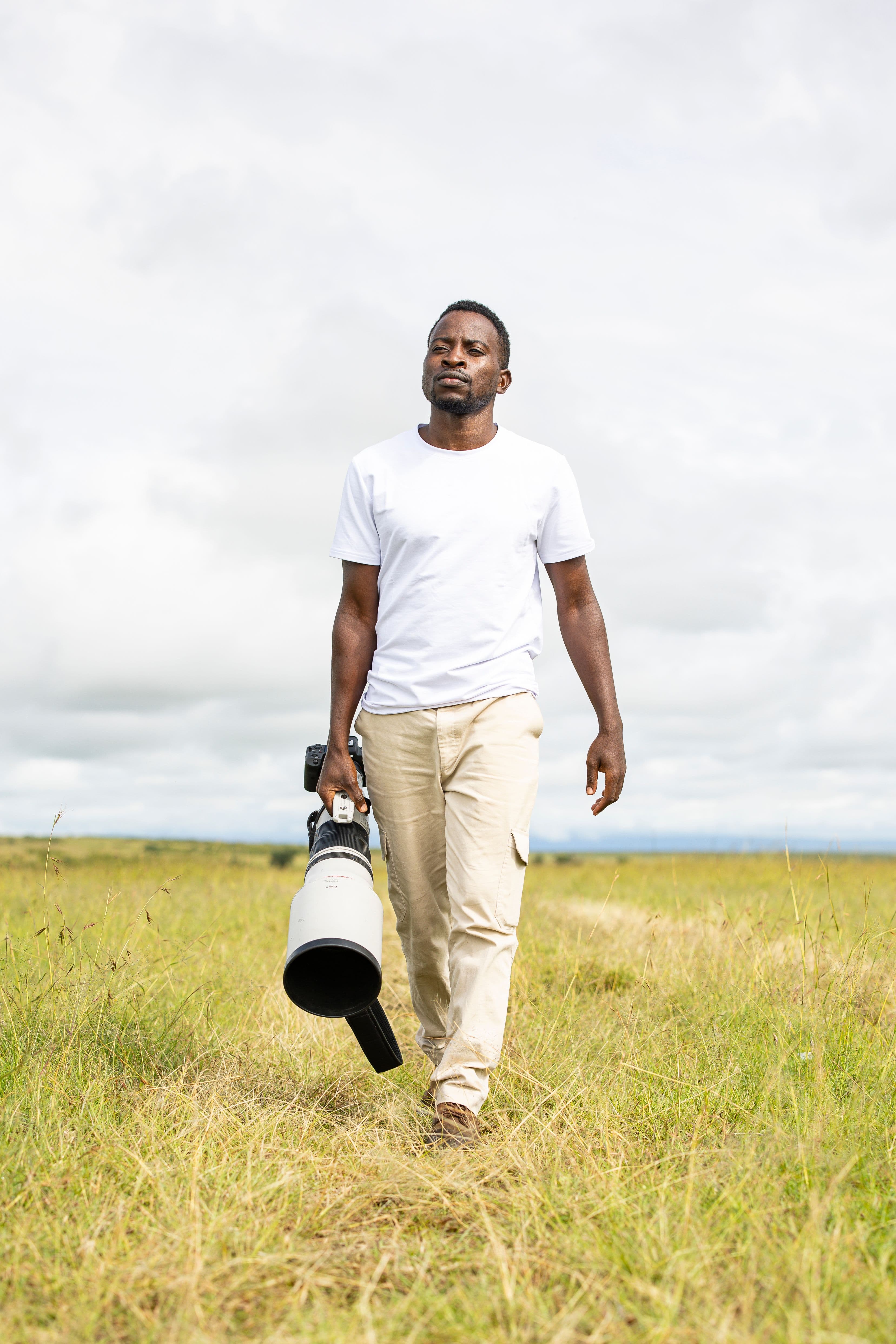
Felix Odhiambo is a filmmaker and documentary photographer driven by a passion for wildlife conservation. His current focus is on bridging the gap between people and the natural world through compelling visual storytelling. Having been raised in an informal settlement in Nairobi, he developed a profound understanding of the human condition, a perspective that deeply informs his art; from documentary photography to wildlife photography, he believes in the power of humanity and strives to translate every experience into art. For them, every shutter sound is a heartbeat and every photo taken is a life changed and archived. Felix has mastered the art of blending narrative and imagery which has gained him significant recognition; during a Mastercard Foundation campaign, two of his captivating photos were featured in the exhibition, ‘African Resilience in the Wake of a Pandemic’ which solidified his position in the photography world and went on to showcase more work at the prestigious 8th Abuja International Photo festival 2023. His social handles include: Facebook: Camau Art Visuals, Instagram: @CamauVisuals and Linkedin: Felix Odhiambo
Q: Going through your work gives off the sense that you focus on the mundane. From the floods in Nairobi to village life, what draws you in when you take a shot; what are you looking to preserve?
F.O: My work is mainly on 'tracing the faulty line,' we all have a life that we desire but sometimes, for us to get there, we only have part of it that we admire and for myself, that would be my day to day challenges. These encounters make it more meaningful than just being granted an opportunity. So sometimes, I'm documenting my own journey and that of those raised in such places (slums). On the other hand, I'm documenting the life that I came to know of later on when I was fully grown and that would be village life.
Q: How did you get into wildlife photography?
F.O: Photography was not my intention; all I wanted to grow into was a good person and the only good people around me then were the priests and that is what I wanted to be too. After high school, I decided to experiment in priesthood to avoid crime related activities which were the only easy viable mode of survival and during this time too, I enrolled for a free film, radio and photography mentorship program that later turned to my sense of direction. I went further on to study Film, TV and Photography at the university thanks to Be-Kids Australia who supported me. In a while, I'd spent much of my time telling mine and my neighborhood's stories that I fell into monotony. This pushed me into trying other related opportunities but wildlife seemed close and realistic through my teacher behind my earlier mentorship. He linked me to a wildlife conservation program which then granted me a chance to pursue wildlife photography.
Q: If a wildlife photographer's diary existed, what would their day look like?
F.O: A wildlife photographer's diary is designed by many things: location, ecosystems, communities, weather, time, animal habits and much more. From 6:30 am, the park begins on a clean slate and we follow directional instincts hoping for active encounters especially from the cats who are often active and energetic in the morning until around 11 am or before and therefore, patience is key when it comes to interacting with wildlife. Once the cats rest, we then switch focus to the other surrounding species. Depending on the weather or how active the wild is, we can either go for a full day game drive which ends at around 6:30 pm or split the drives into two. Afterwards, post-fieldwork begins through data managing, archiving, file sorting, editing, cleaning equipment, battery charging and formatting of the SD cards after backup is done.
Q: What are the challenges you face in your career?
F.O: Consistency is my number one challenge because it is a test on how to keep up with my art which calls for a lot from research, to equipment technicalities and finally, sharing it with an audience. Second, I prefer tend to focus much on long term goals which leaves the short ones, incomplete. Third, technical skills can be challenging when there exists varied catalogues, software and inaccessibility to some platforms. Last year, my work was exhibited in Australia in my absence due to logistical issues. Career gap is another key challenge given that wildlife and street photography are way apart. My current work requires patience and emotional intelligence because for a shot to be considered perfect or outstanding, not only is it about the kind of gear involved or the shooting technique, but also the time involved to interpret that moment. I'm the wild, a lot of actions are beyond one's control and therefore, discipline awareness of the set conservation rules are called for. Last would be how photography/the art of content creation is perceived. For our parents, the work seems a mediocre career and a short lived one which has forced many of us to think of an alternative "survival" career.
Q: What does it take to get to your level or what would you advise someone joining the field, and are there photographers who've held your hand through this journey?
F.O: It takes patience, self-belief and resilience to get here, I know that I'm yet to be where I want to but I am very proud and thankful to God for he his faithfulness. My advice to anyone with a desire to be in this field is to keep going, keep pressing on until it makes sense to you and to everyone out there. It was through my mentor Fredrick Ochieng (SEMA Ochieng) that I'm here today, since day one, he's been here building me brick by brick. And I also appreciate my audience for always shaping my content.
Q: As a wildlife photographer, what observations have you made between nature and the communities surrounding the areas you work in? Is tourism detrimental or an addition to this relationship?
F.O: As a wildlife photographer I think communities play a very vital role in making the whole ecosystem complete. Sometimes you may end up wondering how they co-exist but the community tends to understand the animals, not only how they breed and exist but also how they eat and survive and this stretches on to conservation. Additionally, tourism holds the motivational aspect of it all, for it is not just an accountability system but also an education program.
Q: That's a bit skeptical, have you observed communities directly involved in caring for the wildlife or is that a KWS task?
F.O: Yes, I have. Apart from KWS, we do have rangers and whose recruitment involves the communities around. With that, the sense of care is extended beyond their normal duties since they have to give their all in protecting these animals and also ensuring that safety prevails within and beyond the parks. This has also encouraged creation of conservancies to help reduce human encroachment since ranger recruitment involves training and equipmenting with knowledge and the necessary tools to help create a long lasting relationship within the ecosystem.
Join the Conversation
(0 comments)Sign in to join the conversation
Share your thoughts and engage with our community