The Laws Of Milk

Tarbogei Rono
Contributor
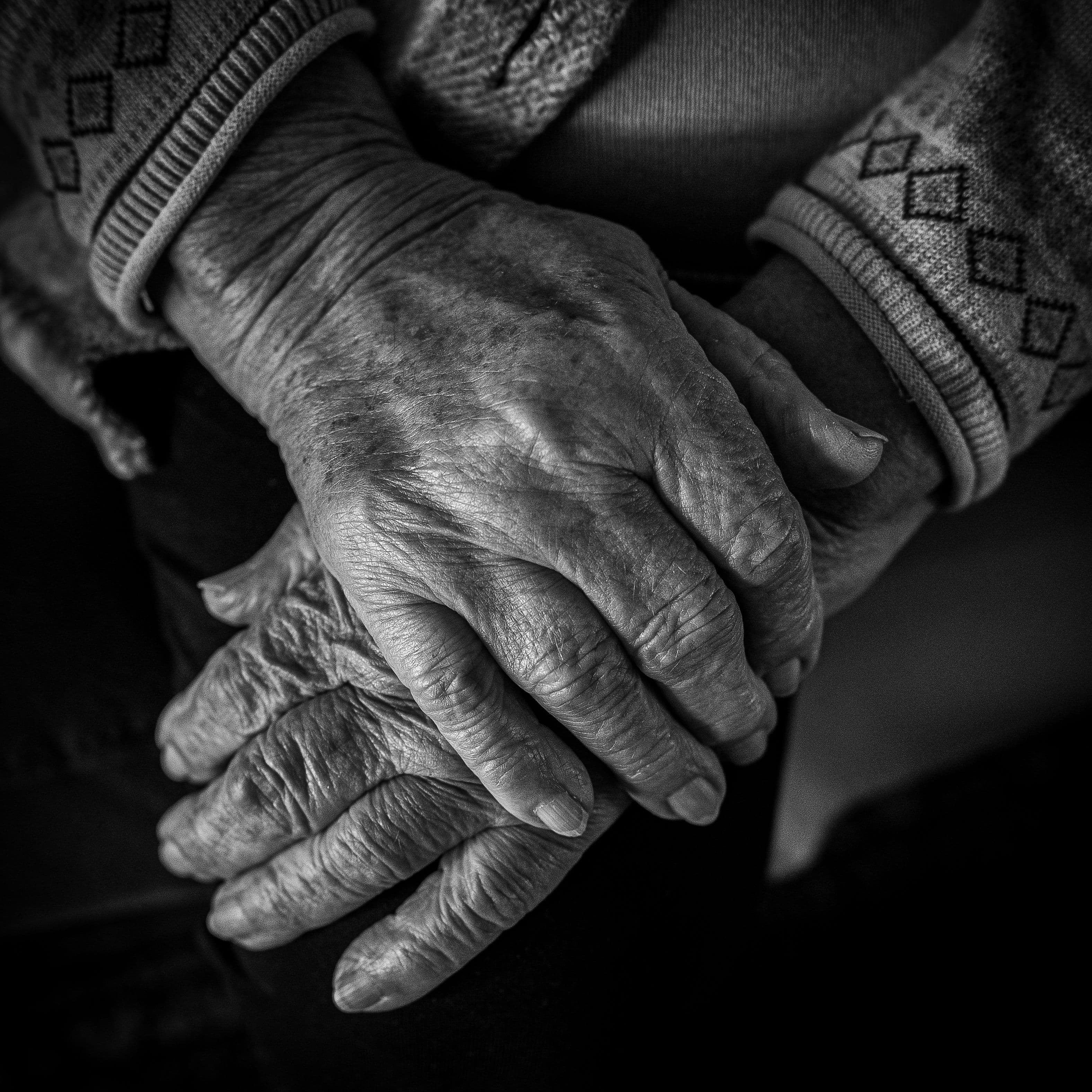
Image by landsmann
-
To look at Gogo Bot Sitienei, God rest her soul, was to read the history of a Nandi woman written onto flesh. Her ears hung in long loops beside her face; lobes stretched thin from the heavy brass ornaments she wore in her youth. The faint cuts on her cheeks had long softened with age but in certain light, they still appeared clearly: thin deliberate lines etched into her skin by steady hands many decades before I was born. She once told me those marks were not made for beauty alone; they announced who she was and where she came from before she even spoke. But as a child, it was her smile that fascinated me most: the missing lower incisor opened into a dark gap at the centre of her laughter. Her other teeth had long surrendered to age ambered by mursik and time; some loosening far from the gums when she laughed too hard. I couldn't help but stare. They seemed so fragile as though they might tumble out mid-sentence. She laughed openly, shoulders shaking until her eye disappeared into the folds of her face, softening her stern face into mischief.
“Gogo,” I once asked her while sitting beside the kitchen hut, “why did they remove your tooth?”
She laughed, a sound like dry maize husks dancing in the wind, rough at the edges but strangely comforting; a laughter alive with the texture of age but warm enough to make me laugh with her. “This is the door for my medicine, Chesaina,” she said. She always called me that, the name I was given as an infant after an ancestor whose traits of stubbornness and fire I was said to have inherited.
“In the event of lockjaw or a fever so strong the mouth refused to open, that gap was the portal through which life was preserved. They poured in milk and the bitter juice of herbs. So you did not starve,” she said, touching the gap.
There was something deeply unsettling but beautiful in that explanation. To my modern sensibilities, the extraction felt violent, unnecessary even. But to her generation, it was preparedness; a people so committed to preserving life that they built a permanent doorway for survival directly into the skull. As a child, I remember touching my own teeth afterward, trying to imagine one of them gone. Yet Gogo carried herself with such certainty that nothing about her ever seemed incomplete. Everything on her body had meaning; the stretched ears, long with loose skin that had grown thin with age were considered a standard of beauty for both women and men.
The round designed sticks known as kipalpaliat were adorned gradually to pull down and expand the earlobes. Larger sticks were then inserted over time. The process was painful but she endured for the love of culture. By looking at a woman’s ears, the jewelry she wore, and the way her body carried these marks, one could tell something of her age and status within the community.
Gogo Bot had said the marks on her cheeks had been rubbed with ash and sand when freshly cut to encourage the bumpy scarring as they healed. These specific cheek marks of beauty and bravery served as ancestry and clan identifiers and were physical indicators of belonging.
Before the clock, there was Asis: the sun, the eye of the divine. I watched Gogo every morning without fail facing the East at dawn, her palms upturned as if to catch the spilling light. She always insisted that to ignore the sun was to ignore the source of ilet, the thunder that brought the rain or the fire that took the harvest. She often told me of how much wisdom was sought in the stars, Kiptamo. She told the time of day and night just by sky gazing and watching her shadow’s length. She was fluent in celestial reading, like the gibbous moon that dictated when to plant and when to move. By the time my uncle, Arap Chemos, began reading the stars aloud to us, the knowledge already felt ancient inside the family. He would sit outside long after the fire had dimmed to a glowing amber, his eyes fixed on the clusters of stars.
"When the stars cluster like goats at a salt lick and appear birir, red or orange," he would say, “the rains will be heavy enough to drown the weeds but spare the grain." This would be followed by shifting winds and temperatures that would often herald a storm. The language of the sky is lost with each passing generation. Baba is not as good as Gogo and Arap Chemos. None of my cousins can read the night sky either. I cannot tell whether these forms of knowledge are disappearing or merely changing shape.
In the evenings after supper, Gogo would sit on a low wooden stool outside the house with a shawl wrapped tightly around her shoulders. Sometimes she shelled maize into a metal basin balanced on her lap. Sometimes she sipped tea slowly from a tin cup while the smoke from the kitchen drifted around her. Those evenings are some of my clearest memories of her. She would begin reciting names of entire generations. She could trace our family line backwards through marriages, cattle exchanges, births, deaths, migrations, and clan relations without ever pausing to think. One name led to another naturally, like water finding its course back to the source.
“Arap Kibet was the son of Arap Tengecha,” she would begin. “And Tengecha married Chepkemboi from Kaplelach. Their firstborn was Kiprono, the one who moved after kemeut, the famine years…”
The names came easily, one after another until the air itself felt crowded with people long gone.
In our culture, names are never random things; they carry time, memory, circumstance. A child can be named after an ancestor, after the season, after the time of day they were born, after an event that happened before their birth. My brother Kigen was born five years into my parents’ marriage, long after my mother was believed to be barren up until one of Gogo's friends had given her the ‘herb of the womb’. His name translates to ‘to wait’. Gogo understood every meaning attached to every name she recited. She believed family stretched far beyond the people who shared your roof. To her, kinship moved across hills, villages, and generations. She taught us that belonging to the same Oreet, a kinship, meant something sacred and permanent.
Our tiondo, our totem, was the moset; the monkey clan. This meant that the primate was not to be hunted, harmed, or eaten within the clan. Anyone who belonged to our totem belonged to us fully, regardless of distance or familiarity. A person from this totem across the country was still family–and Gogo enforced that boundary fiercely. Usually she was gentle while speaking, especially with children, but whenever conversations about clan relations arose, she changed. The softness disappeared and was replaced by an old seriousness that allowed no argument.
That was why my cousin Cherugut could not marry the boy she met in college. The argument is still a vivid memory. Cherugut insisted they were not related; they shared no grandparents, and no visible connection anyone could point to. For her, love should have been enough. But Gogo dismissed the matter immediately.
“He is your brother,” she said firmly. “He is moset.”
And that was the end of it.
Cherugut’s face had fallen with frustration. Love should have mattered more than a clan line stretching back generations. But to Gogo, the matter had already been decided the moment the totem became known. That was how Gogo understood tradition. The totem protected lineage. It reminded people that family did not begin and end with immediate blood. It forced people to move through the world remembering that they belonged to something older and larger than themselves.
“You must know your people,” she reminded me constantly. “Otherwise one day, you will stand among strangers and not recognize your relatives!”
I watched her prepare mursik many times. She would take siset charcoal from the itet tree while it still glowed at the center and place it carefully into the calabash, swirling it methodically until smoke coated the inside completely. The smell settled into everything; the gourds, her clothes, even her hands. The first time I reached for the gourd while standing, Gogo slapped my wrist.
“You sit!” she corrected. “And use the right hand. Milk is a covenant,” she would say. “You treat it with respect!”
Milk was never just milk. Even the gourds were treated carefully. A cracked calabash was mourned almost the way broken household heirlooms are mourned today. You do not simply drink; you honor the gourd, the charcoal, and the cow that gave its service to your lineage. It is impolite to decline milk when offered. Only sip it when seated, never standing, and hold the cup with your right hand. Spoilt milk should never be poured onto the ground; mix it with water first. Do not be greedy so much as to eat beef and milk at the same time or drink milk only from the right side of the cow shed. If milk spills it is for a good reason, for something bad would have happened in its place. The spill wards off a greater calamity that might otherwise have found a way into our home, but the ancestors have spared us.
“These are our ways Chesaina, never forget!”
I realize now that much of what Gogo carried was never written because nobody around her considered it important enough for books. Yet those practices ordered entire lives. They shaped marriages, eating habits, greetings, relationships, and even the way children understood themselves. It was in the way we entered her kitchen hut, stepping across the sill with a subtle knock. The choreography of a greeting; a child bowed their head slightly waiting for the warm feel of Gogo’s palm to rest against their crown in blessing.
She knew medicinal herbs by sight. While walking along footpaths or through overgrown fields, Gogo would stop suddenly, bend down and pull a plant from the soil while explaining exactly what sickness it treated. She would point to the fleshy, serrated edges of Tangaratwet, explaining how its crushed leaves or boiled roots are diluted with water and drunk to induce sweating, which is believed to break a fever. For a cough that sat heavy on the chest, she knew just how to strip the bark of the Soget tree so its smoke could clear the lungs. If a child complained of sharp stomach pains, she would bypass the leaves entirely and dig for the roots of Koloswet to brew a bitter, life-giving decoction.
Gogo thought my acrylic nails looked like eagle talons. She could not understand why girls willingly glued weight onto their fingers. Yet I sometimes wondered if my generation was really so different from hers. She stretched her ears for beauty and belonging. We pierce, contour, inject, and sculpt ourselves for the same reasons. We had our differences. Gogo admired women who endured difficult marriages while I admired the women who left. I never knew the intimate realities of their marriage, only that she had spent her youth in a polygamous home, learning to outlast the hardships of sudden widowhood and the heavy legacy of being segutiet, the first wife.
As a child, she had been named Chebitok. After tumdo, the initiation, she was christened Bot Sitienei. By the time I came to be, Chebitok existed only in stories. There were moments when I wanted to ask Gogo whether she had ever been afraid of the custom but the question always died in my throat. Some memories in her generation were carried with dignity and silence, protected by taboo and reverence alike. She never described the ceremony directly or in detail. Instead, she circled around it carefully, as though certain things were too sacred or too heavy to place fully into words. What surfaced most were lessons about endurance, discipline and the composure expected of women. In her perspective, a girl emerged from the ceremony no longer as a child, but as someone trusted with the responsibilities of womanhood. There was pride in the way she spoke about initiated women, a deep respect for the vigour they carried afterward.
Sometimes while shelling maize or tending the fire, she would mention girls from her siritiet, cohort, in preparation for marriage. When I asked her about their age sets, she replied, “Matinye kwonyik ibinda”. A woman has no age-set of her own. She automatically adopts the social age-set of the husband she marries.
Gogo’s was Chepyosop Chumo with Agui belonging to Chumo. But even as a child, I sensed there were parts she deliberately withheld. Whenever conversations drifted too close to the practice, Gogo’s voice would change and the room would fall quiet. Once, I gathered enough courage to ask whether it had hurt. She stopped stirring the tea for a moment and stared into the fire before answering indirectly. “Pain passes,” she finally said. “Shame does not.” I was so unsettled by the certainty in her voice; the realization that all those women had endured the pain out of terror of social exile. A woman uncut was smeared in dishonor. I remember studying her face and wondering what memories sat behind those words. Some days I feared I was betraying my grandmother simply by questioning the world that shaped her. Now that she is gone, I understand the weight of everything she chose not to say.
There are things I failed to ask her while I still had the chance. I never asked her whether she was in love with Agui before getting married, or if girls of her generation were even allowed such luxuries at all. Whether as a girl she had ever imagined another life for herself beyond marriage, bearing twelve children and the honor of being Agui’s wife. Whether she would have preferred the brightness and comfort of a cozy hospital bed through her twelve natural and unmedicated births over the dark airless hut full of kapsikisyo, midwives, the smell of blood, herbs thick in the heat and unsterilized blades. There are stories I assumed I would hear again later. Like the one she told once after much persuasion. Gogo admitted that she and her cousins used to sneak away during kambakta, evening dances just to watch the muren, young men, showcase their strength and agility in dance. She insisted they went only to observe, but the grin spreading on her face said otherwise. She always finished the story by telling of how they would get into trouble because they were not of age yet.
As the years passed and her spine gave out, the long walks Gogo would take through the fields were reduced into calm afternoons by the hearth. I watched as her fingers grew too stiff to nimbly shell the maize. She would sit with her hands resting on the curved head of her walking stick, her face turned towards the fire as though listening to something inside it. Age softened her slowly then all at once. Yet even in frailty, Gogo remained the center of the family’s gravity. We gathered around her feet to listen to her storytelling. She had lived a full, circular life, lived to see and hold her great grandchildren against her chest. She had shouldered the matriarchy of an entire lineage and even long after the soil settled over her grave, her absence was palpable, lingering in our lives like the stubborn scent of siset smoke that never fully leaves the seasoned gourd.
GLOSSARY
Agui – A term of respect used for a grandfather or an elder male patriarch.
Arap – "Son of"; a patronymic prefix used before a man's name to indicate his lineage
Asis – The sun; traditionally revered in Nandi culture as the physical manifestation or "eye" of the divine, representing the source of life, light, and cosmic order.
Birir – Red or orange; used in the essay to describe the specific fiery hue of a star cluster predicting heavy rain.
Bot – "Mother of"; a matronymic title given to a woman after a significant life milestone or initiation, replacing her childhood name
Chepyosop Chumo – “Wife of” a man associated with the male Chumo age-set.
Chumo – One of the seven traditional cyclical age-sets for men in Nandi culture.
Ilet – Thunder and lightning; associated with the coming of rain or lightning.
Itet – The specific wood (often from the African olive or siset tree) used to create charcoal for cleansing and seasoning milk gourds.
Kambakta – A traditional evening dance or celebratory social gathering where young people met, sang and danced.
Kapsikisyo – Traditional birth attendants or midwives.
Kemeut – A historical period of severe, devastating drought or famine.
Kipalpaliat – Specially designed, rounded wooden sticks or plugs inserted into the earlobes gradually to stretch and expand them.
Kiptamo – Stars or constellations looked to for weather tracking and guidance.
Koloswet – (Terminalia brownii) A native medicinal tree; its roots are dug and boiled to create a bitter decoction used to treat acute stomach pains and upsets.
Matinye kwonyik ibinda – A saying meaning "A woman has no age-set of her own." It reflects the tradition where a woman adopts the social age-set and standing of the husband she marries.
Moset – The monkey; specifically serves as the sacred totem (tiondo) for a particular clan.
Muren – Young initiated men or warriors.
Mursik – Traditional Kalenjin fermented milk that is seasoned, preserved, and flavored using special wood charcoal inside a gourd.
Oreet – Clan or kinship; a sacred, overarching ancestral lineage shared across families.
Segutiet – The honored title for the first or senior wife in a traditional polygamous household.
Siritiet – An age cohort; a group initiated during the same period.
Siset – The specific tree species whose burning embers produce the fragrant, protective charcoal used to coat and sanitize the inside of a mursik gourd.
Soget – (Warburgia ugandensis / East African Greenheart) A highly valued medicinal tree; its aromatic bark is stripped and burnt so the therapeutic smoke can be inhaled to clear severe chest coughs, asthma, and headaches.
Tengeretwet – (Aloe kedongensis) A native succulent plant with fleshy, serrated edges; its leaves are crushed or roots are boiled to create a medicine used to break deep, severe fevers and treat malarial symptoms.
Tiondo – Totem; the sacred animal or natural symbol that identifies a specific clan (Oreet) and carries strict taboos against hunting or harming it.
Tumdo – The sacred, highly revered traditional initiation and transition ceremony that transforms an individual's social status, responsibilities, and identity from childhood to adulthood.
Written by
Tarbogei Rono
Taborgei Rono (Martha Jepkoech) is a Nandi writer and poet whose work interrogates the intersections of heritage, feminism, and social justice. She was recently honored as the 1st Runners Up for the Emerging Poet Award by Penwarriors Kenya and has been published by Qwani, The Kalahari Review among others.Her writing is a deliberate “unearthing”,using the oral traditions of the Kalenjin people to address critical societal issues and the friction of modern identity. She believes that the ink of the modern writer must carry the smoke of the ancestors' fire. When not writing, she enjoys immersing herself in poetry and empowering conversations that inspire change.Connect with her on Instagram at @taborgeipoetry to explore more of her work.
View all storiesJoin the Conversation
(0 comments)Sign in to join the conversation
Share your thoughts and engage with our community